Tuesday, May 9, 2017

Creating an E-folio

Creating an E-folio looks like work, but in fact it is a lot of work. The e-folio is a google site where young teachers can put their lessons, edTPA tasks, information about them, resume, professional organizations, projects, etc. It has taken me a week to complete my e-folio and all the aspects that go with it. The e-folio is very time consuming, but looks great at the end and it is a great way for people to find teacher candidates. Even though the e-folio is very time consuming, not a lot of thinking goes into it. It is mostly putting all your documents together and answering easy questions. Do not stress over the e-folio, just make sure to have time to stop and do some work on it during the year. You will see that putting just two hours into it every other day isn't hard to do, and in the long run your e-folio tasks get smaller and smaller. I believe waiting till the last minute is not a good idea, but spreading out your work and doing a little at a time is the way to go. There is no anxiety or being nervous because things are getting down and your not spending that much time doing it. My e-folio took my maybe two weeks working on it every other day for a couple hours and I wasn't worried about submitting it at all. Just know that being nervous is silly and hurts you more. Live your life, and get rid of these non-sense emotions.

Sunday, May 7, 2017

Dr. Smirnova

Dr. Smirnova's class taught me so much before student teaching. It opened my eyes to a whole new type of teaching and how to actually teach a whole classroom. I owe her so much for what she has done for me. Let me go through a couple of things on why she is the best. She showed me what a direct instruction looks like and the concepts for having it. It should be teacher-centered and full of information, given to the kids at a fast pace with minimal critical thinking questions. She taught me about Inquiry/collaborative instructions. Showing me the steps of inquiry and to put it into a classroom. Creating experiments or activities related to problems, and how it is more student-centered. She taught me how to engage the classroom to create a positive environment. This can be from he awesome knowledge of digital tools. Having digital tools and using them in your classroom is fun for everybody and creates a powerful lesson. It can be used in the intro, body, or end of your lessons. She taught me about different projects to give in the classroom: Jigsaw, artifact bag, book trailer, etc. I wouldn't be as confident as I am now for student teaching if it wasn't for her. If you are reading this Dr. Smirnova, THANK YOU so much for your help and everything you do for us.

Sunday, April 23, 2017

My Experience to get into Student Teaching

I am a junior in college at Mount Saint Mary College, I am majoring in Math, and hope to become an elementary teacher in the future. I was thinking of Student Teaching in the Spring of next year, but as I was enrolling into classes I couldn't get into the math classes I needed. I emailed my professors and they told me I could only take the math classes during the Spring and that math education undergraduate have to student teach in the Fall. However, everything was already due for Fall student teaching. I emailed the head of student teaching, and told her my problem. She said I had to do everything by tomorrow and email it to her. I was so flustered, but got right to work. I wrote my application, resume, and essay that night in order for me to student teach. I then had to fill out another application and essay to my student teaching schools to let them know who I was. I am now proud and excited to say I will be student teaching next semester in the Fall at Cornwall 2nd grade, and Marlboro 5th grade. I just want everyone who is reading this that, there is work always, but it pays off and open a brighter future. There is always a rainbow on the other side, and life will always be a roller-coaster having its ups and downs.

Sunday, April 16, 2017

Protista

In Science Methods we did an assignment on the six Kingdoms of Life Science. We split up into groups and each group had a different kingdom. My group was the Protista Kingdom, which are unicellular organisms. The groups had to come up with a presentation and then present to the remaining students in the class. I created the number of cells slide and the cell wall slide. We presented to our class and quizzed them on what they learned using a kahoot. I loved this activity because my group mates and I had so much fun decorating and making our presentation exciting and engaging. We use many gifs and funny pictures to intrigue our audience, and I hope you can take a look at it.
Here is the link to my presentation

Sunday, April 9, 2017

Students in the Stages of Grief

Teachers will come across students that are dealing with Loss. This can be: Death, Moving Away, Loss of a Friend, Divorce, Changing Illness, or a Disability. Teachers should first understand the Stages of Grief: Shock, Denial, Anger, Bargaining, Depression, Testing, and Acceptance. Teachers should look to see if students are showing signs of the Stages of Grief so they can help the student get through their harsh time. If teachers do see a student going through the Stages of Grief, then there are things they should not do. Never say, "Things will get better," loss never goes away, pain is only resolved. Also never say, "I Understand," this is the worse thing you can say to a student going through loss, it is actually an insult to the student. No one has the same experiences/same relationship that the student has/had. Things for teachers to do is to be empathetic and say things like, "Sorry to hear that,"teachers should acknowledge what they are saying/addressing, or else the student will close up.

Sunday, April 2, 2017

Digital Tools


Teachers need to know that everything they used to know about school is a lot different now. The world is changing and so is technology. Teachers must keep up with new technology and insert it into their teaching to actively engage and produce an easier way of children to acquire knowledge. Having digital tools promotes personalization. When students use digital tools they put their ideas and things about themselves in them causing a personal attachment. Using digital tools also has easy accessibility. Being able to share files and use pictures and videos are great way to teach students quicker. Digital tools also cuts efficiency. Using online tools effectively cuts costs, maximizes resources, and heightens reach. Studies have shown that students using technology as an education tool become more engaged in the process and more interested in growing their knowledge base. In some cases they don't even realize they're actively learning. Some examples of digital tools to use are: Animoto, WordClouds, glogster, blogger, and GoAnimate.

Example of an Animoto: link

Sunday, March 26, 2017

Mirror Books for Mental Health Disorders

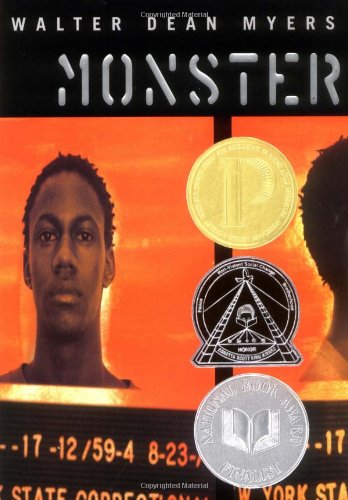
Statistically, 1 in 5 people show signs of mental health disorders. Some examples of mental health disorders are depression, anxiety, and bipolar disorders. What surprised me about talk therapy was it can also make things work for someone with a mental health disorder. It can make things worse because children don't want to remember past memories of their disorders or talk about it. It can cause them to get more frustrated, anxious, or depressed. However, a teacher can use activities like art to reveal what the student wants to share, since art isn't in oral communication. This can help a teacher create that teacher student relationship and help the teacher understand what the student is going through with their disorder. A great way a teacher can help students like this is to have mirror books. Mirror Books are books on real life events that student go through, it is books that students can see themselves in. For example, a book can be on a boy who joins a gang becoming a bully, his father dies, and he wants to get out of the gang and re-shape his life. Mirror books can help students see a resolve or a way to get out of tough situations.

Sunday, March 12, 2017

Collaborative/Inquiry Lessons

Just like every lesson you must have an overview. For an inquiry lesson you should say what you are doing and how this lesson is an inquiry instruction. For your goals you should have three: Academic, Information Processing, and Performance objectives. Remember to put your materials and also add your technology materials. Put in any of your vocabulary words that will be use in the lesson, underneath academic vocabulary. Then begin your introduction procedure. The introduction should be how you will greet the class, what they will be learning, and how they will review the steps of inquiry. It is very important to review the steps of inquiry so students can use it for any problem they face. Next is the explore procedure, where the teacher should break the students up into groups and provide a good explanation on what the activity is and how the students will do it. Elaborate is when you write the students independent practice. For evaluate you should put down three of your assessments: Diagnostic, Formative, and Summative. Don't forget to write about your modifications/accommodations. Then finally write some reflective questions that you would like to ask yourself at the completion of the inquiry lesson.

Sunday, March 5, 2017

Mental illnesses in the Classroom

If teacher's come across a child that has a mental illness, they should NEVER get mad at the child. Let's say a child has Bipolar Disorder, and one second the child is nice and kind, and the next he is driving the teacher crazy. The teacher should never alter there voice or get mad at this child, it is not there fault. It does not help the child by getting mad at him or her. Things you shouldn't do is be judgmental, this can crush a student instantly. Another is to never tell the student to change, the student is fine who he or she is. If a teacher says that, then the truth is the teacher is the one to change.

What if there are problems at home, and school is the child's safe place? Well the teacher that got mad and was judgmental to the child just destroyed that safe place. Things to do when a child has a mental illness is maybe talk to the student about the behavior at the end of the class. If teachers sense something off they should talk to the student and ask if they can do anything to accommodate them. Teachers should reach a conclusion with the child that is fair for both parties. An example would be to take a break. That Bipolar student can feel when he or she starts getting angry, and a simple way to reach a conclusion is for the student to take a break and maybe walk to the water fountain and come back when he or she is ready.

Sunday, February 26, 2017

How to Teach Direct Lessons

Image result for EngageImage result for EngageImage result for direct instruction

Direct lesson plans are lessons where you throw a good amount of information at the students. You keep throwing information and review a couple of times in the lesson, just to make sure they are understanding.
You must create an introduction where you pre-assess the students on your topic and tell them what you will be teaching today. The introduction should be about 3-5 minutes. The development should be where you give them all the information and review it in chunks. Usually a teacher should give them a note sheet so they are following the slides and note sheet filling it in accordingly. This helps make sure they are paying attention, because students get bored when a lot of information is getting thrown at them. This is why during your development to have lots of pictures and videos to engage your audience. Usually during the development you should have at least three activities, one is the note sheet. Some examples of activities can be matching, questions, crossword puzzles. The closure should be what they learned, the students should be saying this. There should also be a final activity like an independent practice. A great example of an independent practice is making a Kahoot.

Sunday, February 19, 2017

Teaching Space

Image result for spaceIn Science methods class, we had to teach our classmates about the solar system and different things in space. I great way to do this was using the digital tool Time toast. Out of the four of us, we picked a random NASA article each. Then we created a word wall using WordCloud. This was a great way to introduce a space lesson, and pre-assess students learning. We used our word wall words to find more information on them, like when they were discovered and by who. For example, a word of ours was STAR, so we talked about the first person to discover that the Sun was a star and that was Anaxagoras in 450 BCE. We created 13 events out of the 13 words on our word wall. As we taught our colleagues about Space, we made sure to elaborate more than what was on the board, we often repeated what we already learned. This is a good thing though so we can implant the information into their minds more. Finally we used a Kahoot, another digital tool, to create a summative assessment of what our classmates just learned. The Kahoot only had five questions, but it told us if our classmates understood our lesson or not.
Image result for Kahoot
Link to our Time toast


Sunday, February 12, 2017

Collaboration Plans

Cooperative lesson plans are very important in unit plans.  Cooperative lesson plans focus on student's social skills. Also teachers must always remember that cooperative lessons have two goals, understanding content and practicing social skills. Performance objectives are based on what the teacher wants the students to learn.
 Image result for cooperation
This should be social skills, content, and evaluating themselves, as well as the group on how they collaborated. Materials should one set which is given out to each group, there is no individual materials. The introduction is where we find out the students social skills, and report on what the students will learn today. The development is where the teacher explains what he or she expects of the students, with both their social skills and the content being learned. The closure should also have two parts, the group projects and the roles the students played in their groups. With every cooperative lesson you should have the acronym, PIGS. Positive interdependence which means the students have to work with one another to benefit each other. Individual accountability means each student is accountable for their work in the group, the group must evaluate themselves and one another. Group Processing is when the students reflect on their work, they also talk about positive and effective working relationships. Social skills is the certain skills needed for cooperative learning. These skills are forming skills, functioning skills, fermenting skills, formulating skills, etc. Remember, Cooperative lessons have two goals, and two closures.Image result for cooperation